AI Workflow Assistant

Deciding when AI acts, and when it doesn’t
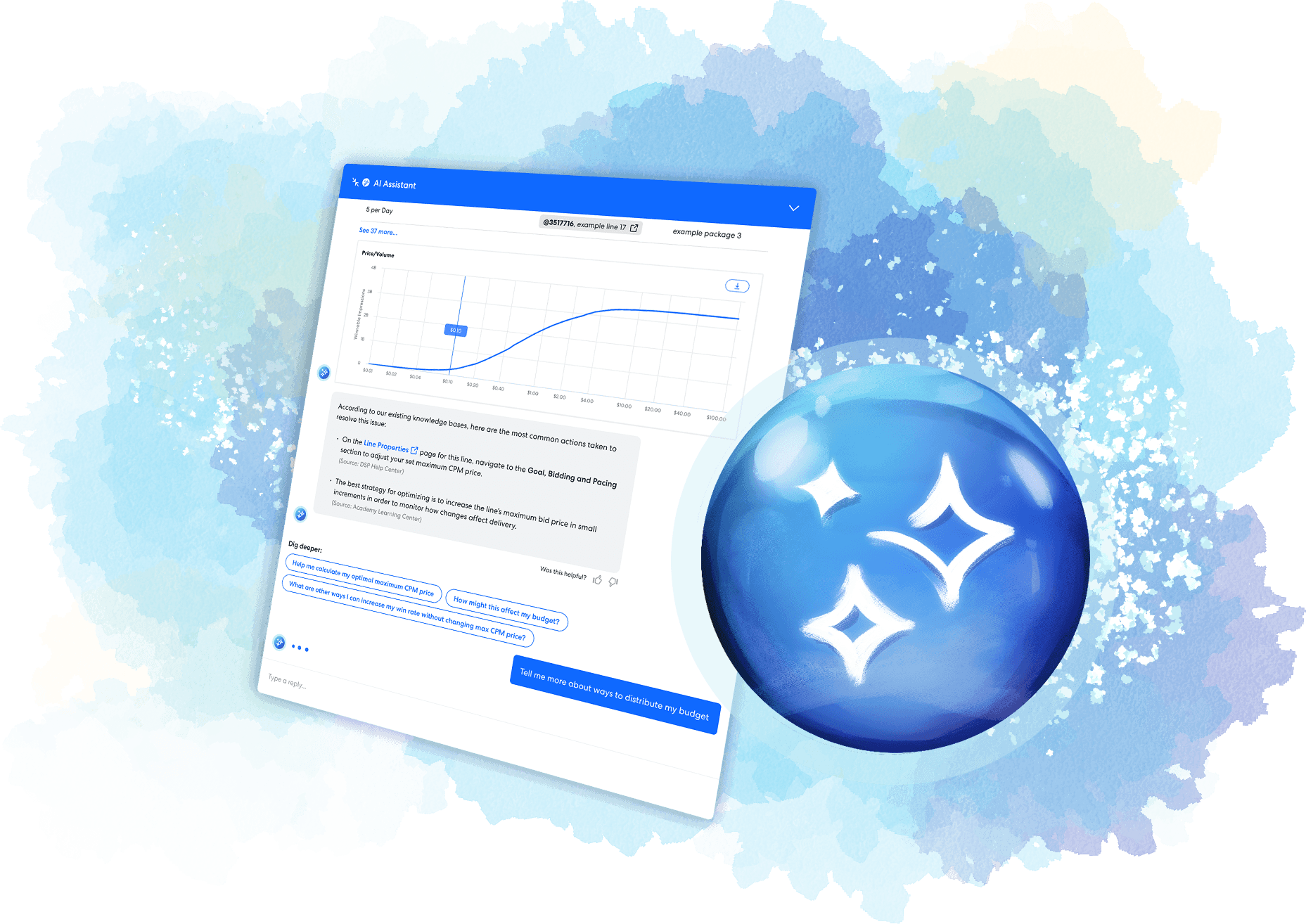
A product strategy and design framework for an embedded agentic AI assistant for a programmatic ad platform. Enables automation where it’s safe while keeping humans firmly in control of critical decisions.

A product strategy and design framework for an embedded agentic AI assistant for a programmatic ad platform. Enables automation where it’s safe while keeping humans firmly in control of critical decisions.

A product strategy and design framework for an embedded agentic AI assistant for a programmatic ad platform. Enables automation where it’s safe while keeping humans firmly in control of critical decisions.

Brand visuals have been modified to respect confidentiality. All work shown is human-generated.

Brand visuals have been modified to respect confidentiality. All work shown is human-generated.

Brand visuals have been modified to respect confidentiality. All work shown is human-generated.

My Role

I spearheaded the strategic design initiative, leading a team of three designers in developing a series of design principles and process for designing for generative and agentic AI. Using these principles, I developed zero-to-one designs for an agentic AI troubleshooting assistant for our ad tech platform.

Led the strategic design initiative, guiding a team of three designers to define design principles and processes for generative and agentic AI. Applied the framework to deliver zero-to-one designs for an agentic AI troubleshooting assistant in our ad tech platform.

Led the strategic design initiative, guiding a team of three designers to define design principles and processes for generative and agentic AI. Applied the framework to deliver zero-to-one designs for an agentic AI troubleshooting assistant in our ad tech platform.

Timeline

March 2025 – Present

March 2025 – Present

March 2025 – Present

Team Size

3 Designers

1 Researcher

3 Designers

1 Researcher

3 Product Managers

8 Engineers

3 Designers

1 Researcher

3 Product Managers

8 Engineers

Deliverables

Team Vision

Design Principles

Visual identity

AI components

Product vision

Design principles

Visual identity

AI components

Product vision

Design principles

Visual identity

AI components

My Role

Led the strategic design initiative, guiding a team of three designers to define design principles and processes for generative and agentic AI. Applied the framework to deliver zero-to-one designs for an agentic AI troubleshooting assistant in our ad tech platform.

Timeline

March 2025 – Present

Team Size

3 Designers

1 Researcher

3 Product Managers

8 Engineers

Deliverables

Product vision

Design principles

Visual identity

AI components

Promotional Video

Now that this feature is live, you can see it in action in this launch announcement video.


The case study screens use alternate branding to respect a prior confidentiality agreement.

Framework Overview

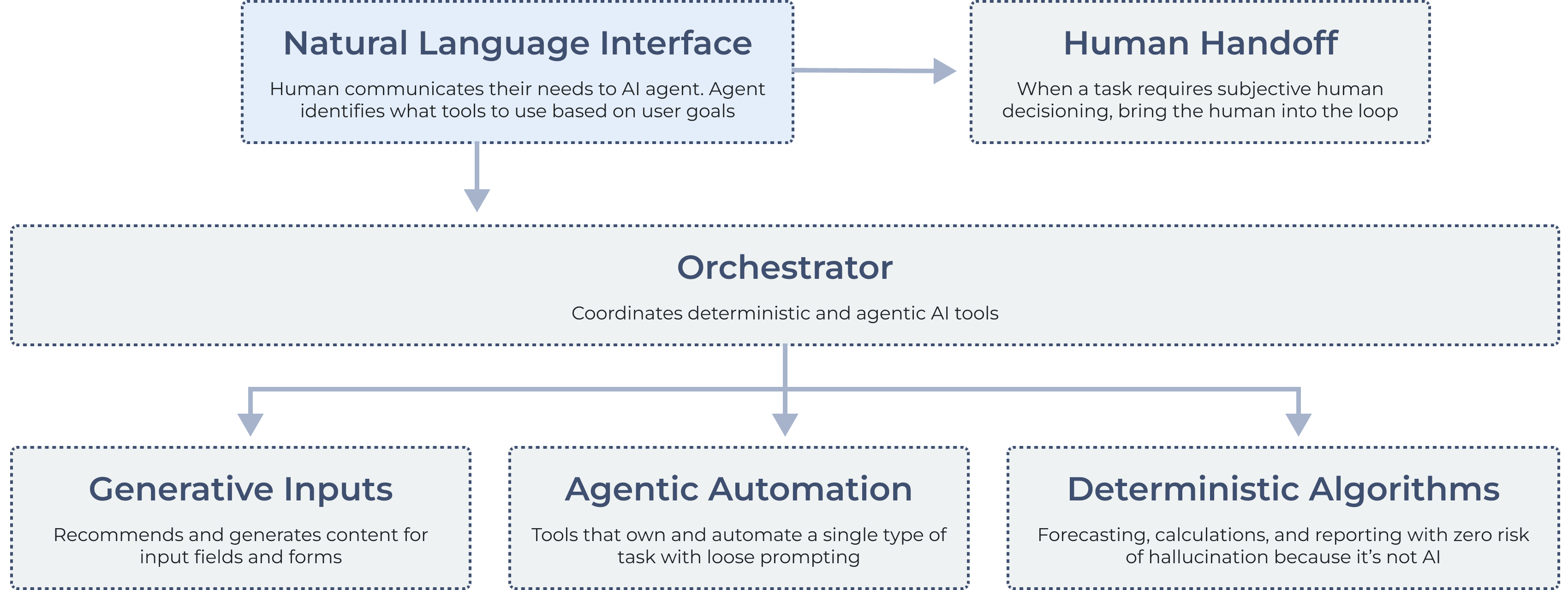
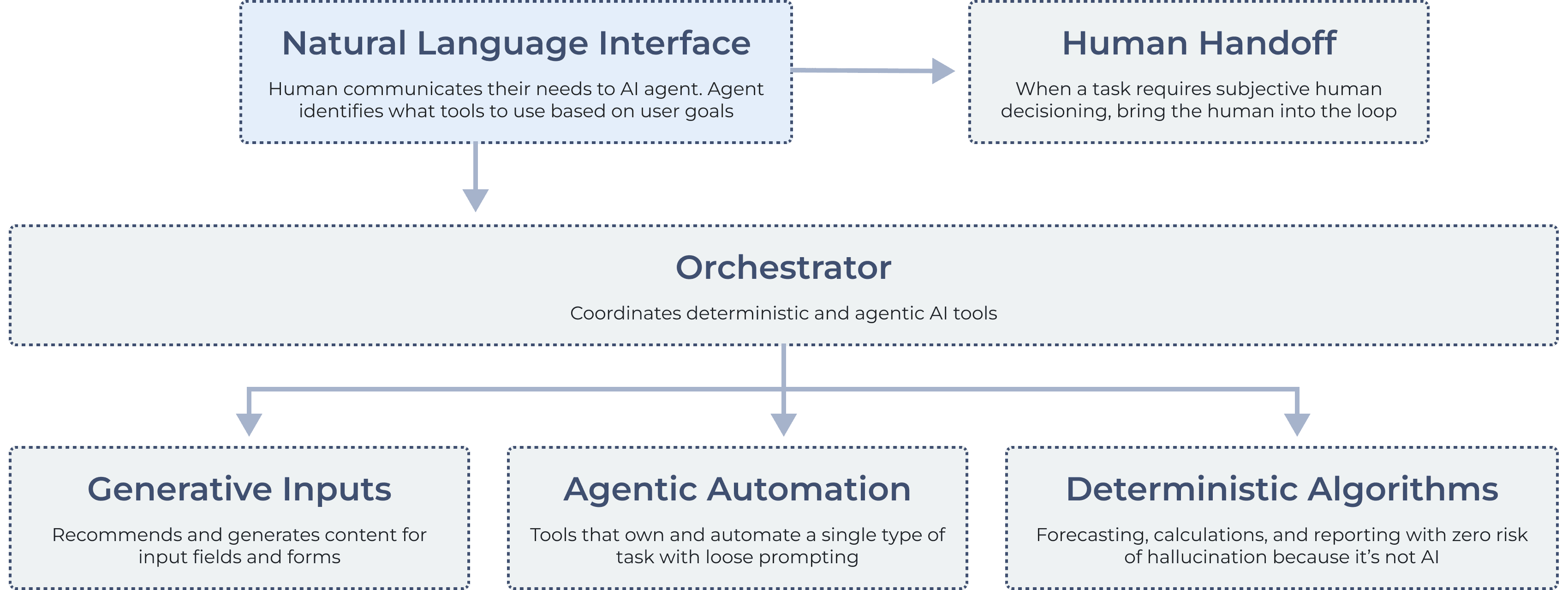
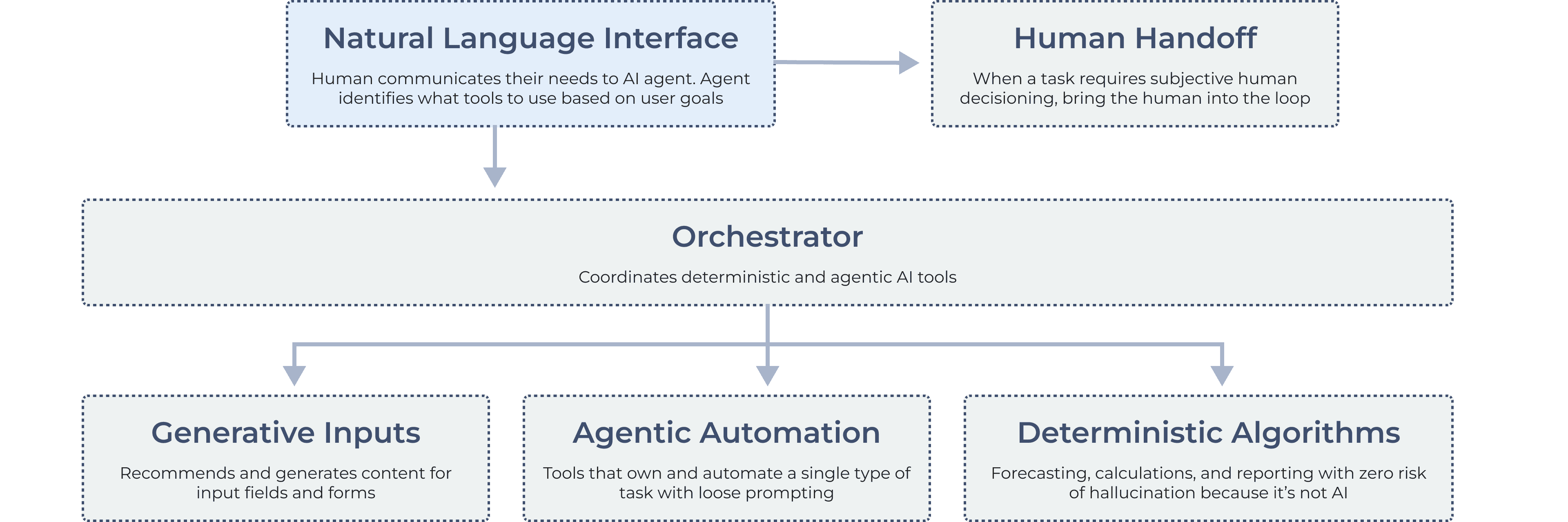
AI Strategy: Embedding AI into core platform workflows

  • Built a suite of atomic AI tools to power discrete workflows such as generating inputs, automating tasks, and aggregating data.

  • Introduced an orchestration layer that blends AI with deterministic systems and trusted data sources to reduce hallucinations and control token cost.

  • Created a natural language interaction model that clarifies when the system acts autonomously and when humans stay in control, preserving trust and accountability.

Feature Highlights

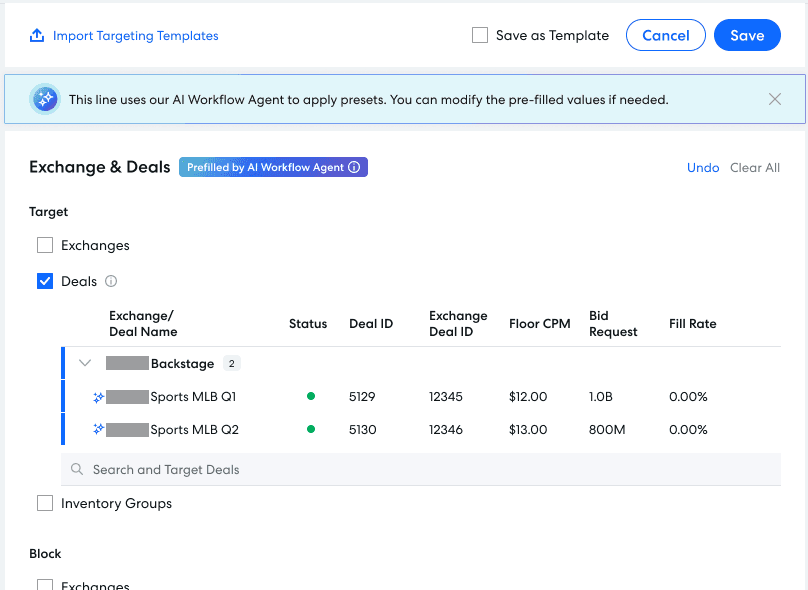
Generative Input Presets

AI takes over repetitive input tasks, filling in long form fields and providing recommendations based on predicted user behavior.

Primary design considerations

  • Visual transparency: make it clear which fields are AI-filled

  • Data transparency: explain why results were chosen

  • Error recovery: allow manual override

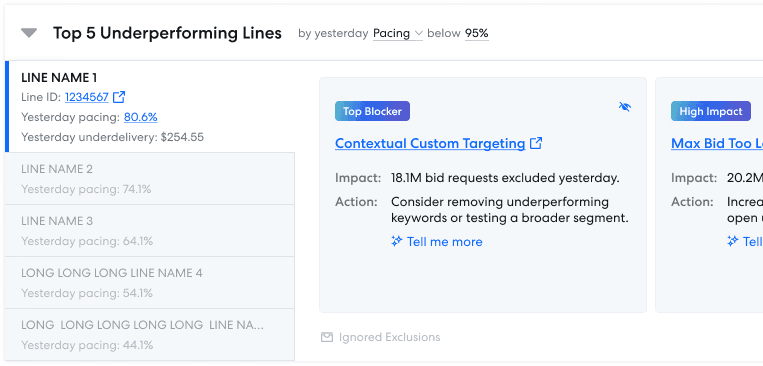
Top 5 Underperforming Lines widget designed by a colleague

Agentic Automation

Specialized tools to intelligently automate specific tasks, e.g. troubleshooting underperforming line items or creating custom audience groups

Primary design considerations

  • Visual transparency: make it clear which workflows are AI-enabled

  • Data transparency: explain what data informs these decisions

  • Confidence calibration: allow users to tune risk

  • Preserving human authorship: all permanent changes must be confirmed by a human before committing to a change, allow mid-task interruption or correction

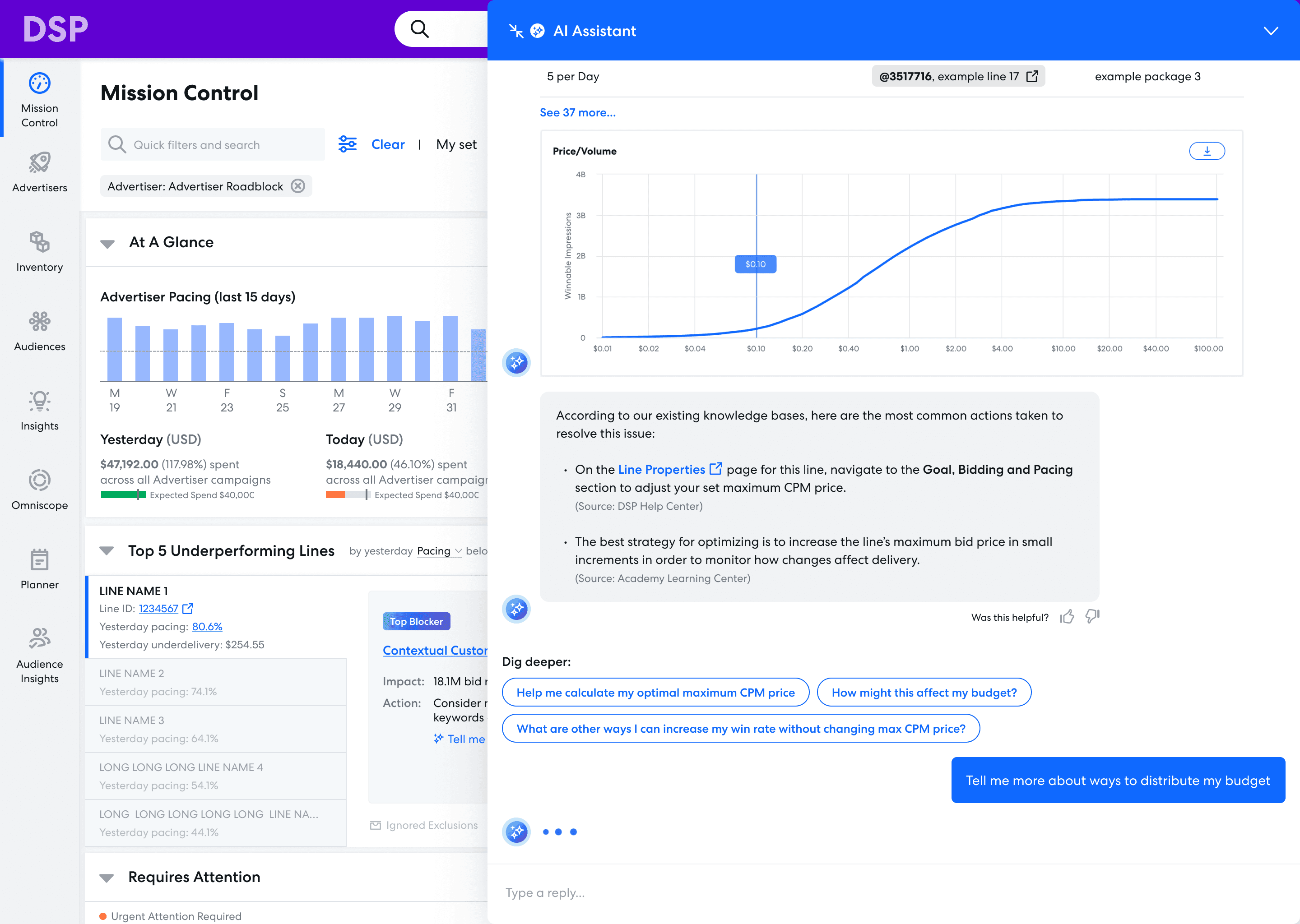
Chat Interface and Orchestrator

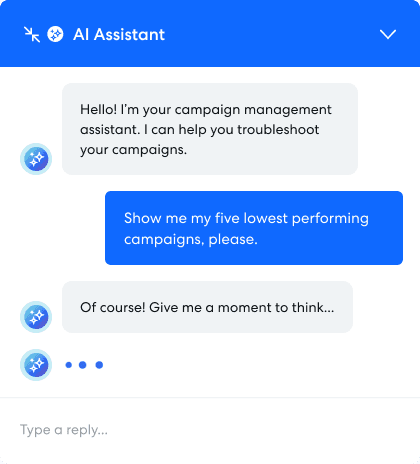
Coordinates tools and works with users to manage their campaigns using a multimedia chat-based interface.

Primary design considerations

  • Data transparency: cite sources for recommendations

  • Scope and context management: prompts to prevent excessive token expenditure due to users asking for things the agent can't do

  • Governance: clear guardrails for multi-user data access

  • Hallucination mitigation: the agent calls on deterministic algorithms to handle calculations and does not invent numbers

  • Preserving human authorship: all permanent changes must be confirmed by a human before committing to a change, allow mid-task interruption or correction

Generative Input Presets

AI takes over repetitive input tasks, filling in long form fields and providing recommendations based on predicted user behavior.

Primary design considerations

  • Visual transparency: make it clear which fields are AI-filled

  • Data transparency: explain why results were chosen

  • Error recovery: allow manual override

Top 5 Underperforming Lines widget designed by a colleague

Agentic Automation

Specialized tools to intelligently automate specific tasks, e.g. troubleshooting underperforming line items or creating custom audience groups

Primary design considerations

  • Visual transparency: make it clear which workflows are AI-enabled

  • Data transparency: explain what data informs these decisions

  • Confidence calibration: allow users to tune risk

  • Preserving human authorship: all permanent changes must be confirmed by a human before committing to a change, allow mid-task interruption or correction

Chat Interface and Orchestrator

Coordinates tools and works with users to manage their campaigns using a multimedia chat-based interface.

Primary design considerations

  • Data transparency: cite sources for recommendations

  • Scope and context management: prompts to prevent excessive token expenditure due to users asking for things the agent can't do

  • Governance: clear guardrails for multi-user data access

  • Hallucination mitigation: the agent calls on deterministic algorithms to handle calculations and does not invent numbers

  • Preserving human authorship: all permanent changes must be confirmed by a human before committing to a change, allow mid-task interruption or correction

Promotional Video

Now that this feature is live, you can see it in action in this launch announcement video.

The case study screens use alternate branding to respect a prior confidentiality agreement.

Now that this feature is live, you can see it in action in this launch announcement video.

The case study screens use alternate branding to respect a prior confidentiality agreement.

Promotional Video

Now that this feature is live, you can see it in action in this launch announcement video.

The case study screens use alternate branding to respect a prior confidentiality agreement.

Design Goals

  1. Seamless — Works within how people already do their jobs, instead of asking them to learn something new..

  1. Keeps Humans in Charge — Helps users think and act faster without taking decisions out of their hands.

  1. Unobtrusive — Shows up only when needed, and steps back when it’s not.

  1. Understands Context — Responds based on what the user is trying to do, rather than with generic, one-size-fits-all answers.

Design Goals

  1. Seamless — Works within how people already do their jobs, instead of asking them to learn something new..

  1. Keeps Humans in Charge — Helps users think and act faster without taking decisions out of their hands.

  1. Unobtrusive — Shows up only when needed, and steps back when it’s not.

  1. Understands Context — Responds based on what the user is trying to do, rather than with generic, one-size-fits-all answers.

Design Goals

  1. Seamless — Works within how people already do their jobs, instead of asking them to learn something new..

  1. Keeps Humans in Charge — Helps users think and act faster without taking decisions out of their hands.

  1. Unobtrusive — Shows up only when needed, and steps back when it’s not.

  1. Understands Context — Responds based on what the user is trying to do, rather than with generic, one-size-fits-all answers.

The Challenge

Business Goals: Define a scalable AI vision without slowing delivery

  • Establish a clear, future-facing vision for how AI fits into the ad tech platform.

  • Enable rapid experimentation and delivery of AI features without blocking active engineering work.

  • Build a system that can adapt to new AI capabilities as the technology evolves.

Design Strategy Goals: Clarity, alignment, and consistency in a fast-moving space

  • Align leadership, product, and engineering through a shared design vision.

  • Create processes that kept the team current on emerging AI patterns and technologies.

  • Maintain design cohesion and quality despite short timelines and continuous change.
Research

Foundational Research

  • Industry Landscape — Reviewed articles, research papers, and presentations to understand current trends and emerging practices in AI.

  • Competitive Analysis — Analyzed 7 competitors' approaches to designing and integrating AI into their products.

  • User Needs — Surveyed 131 participants and held 15 in-depth interviews to identify user expectations, pain points, and opportunities for AI.
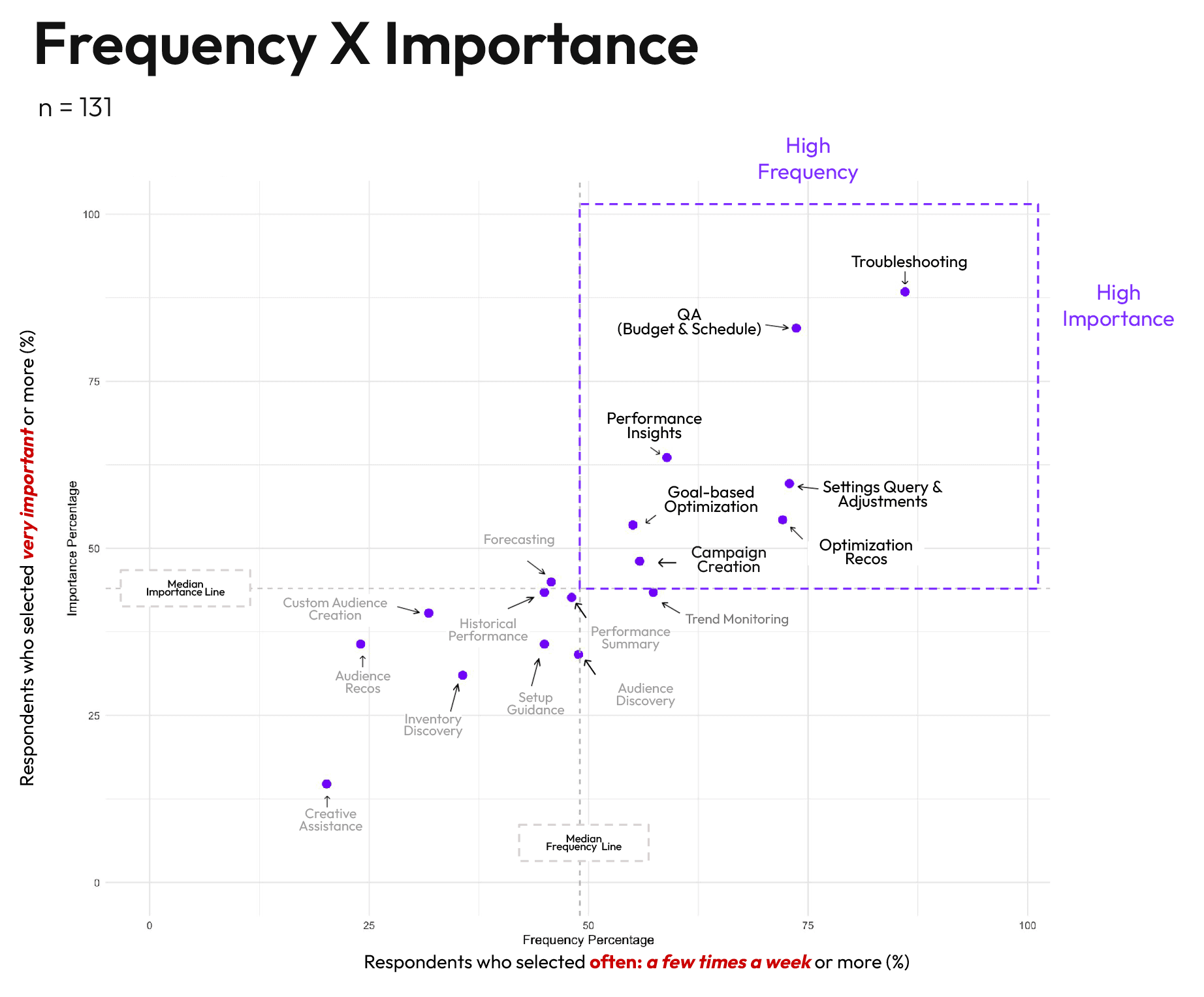
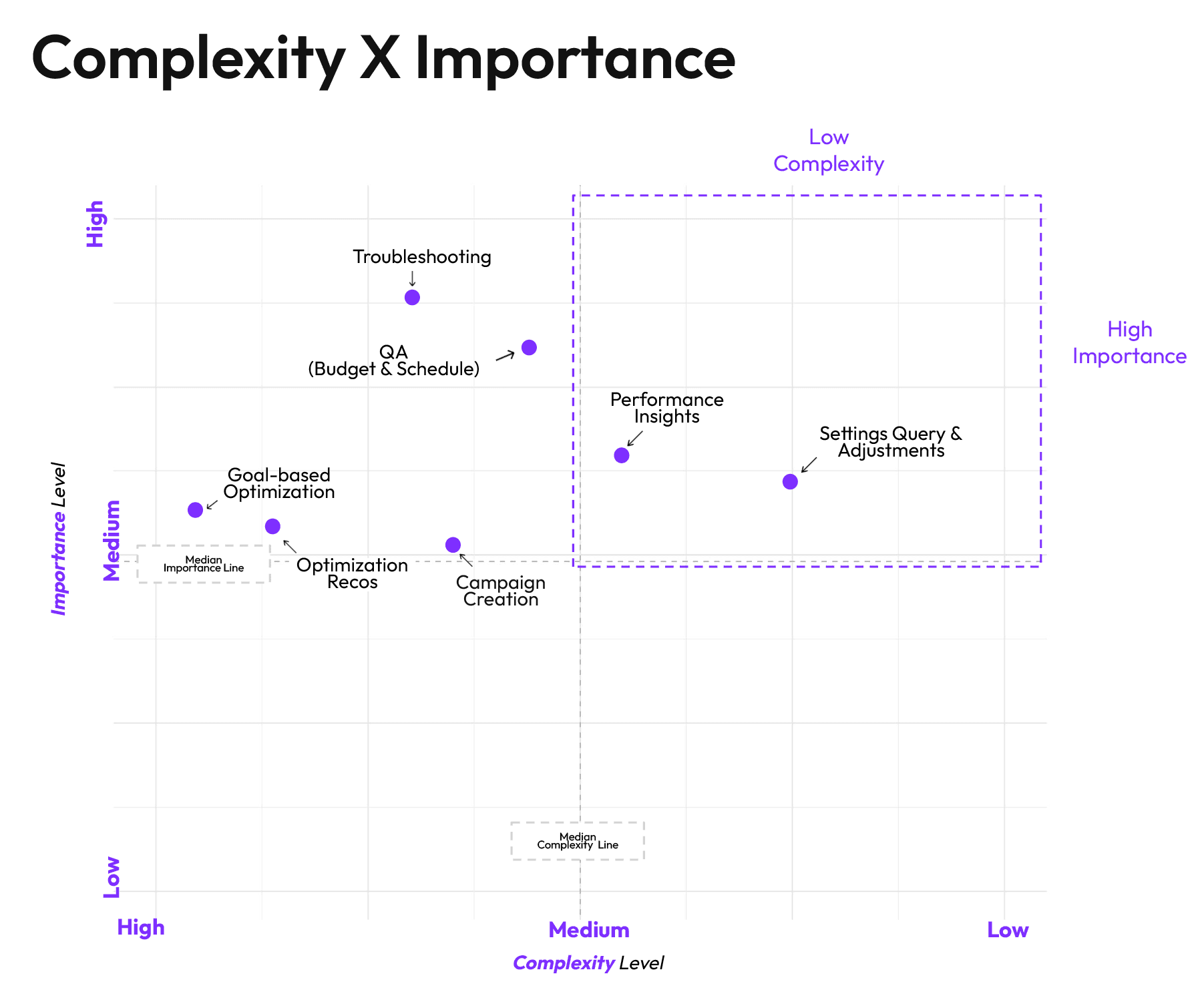
Survey results compiled by researcher Chen Zeng.

Chart 1: Most important user tasks where AI could provide value.
Chart 2: Workflows users found most complex to manage on their own.

Survey results compiled by researcher Chen Zeng.

Chart 1: Most important user tasks where AI could provide value.

Chart 2: Workflows users found most complex to manage on their own.

User Expectations

  • Context-aware responses

  • Interactive back-and-forth guidance

  • Validation before applying changes

User Concerns

  • Task errors/inaccuracy

  • High manual effort for error correction

  • Lack of transparency

Developing Design Principles

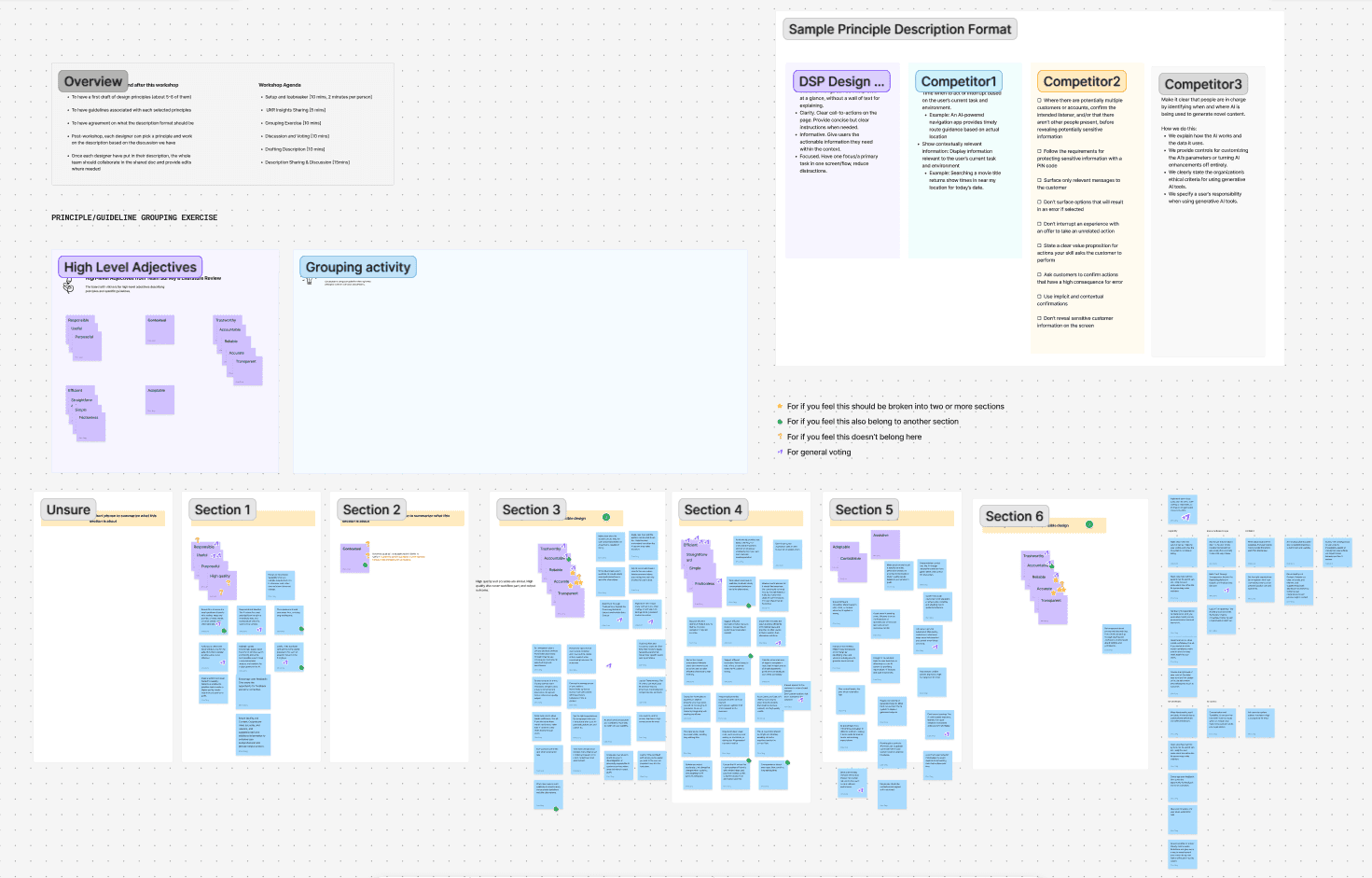
Affinity Diagram: Shaping Core AI Design Principles

  • Synthesize Insights — Combined user feedback, competitor analysis, research, and internal expertise to capture what makes AI design effective.

  • Identify Priorities — Organized themes and voted to surface the most critical principles that would guide the product.

  • Translate to Action — Turned each principle into tangible design guidance, ensuring consistency and measurable impact across the platform.
Design Principles

High-Quality, Reliable Output

  • Ensure output is aligned to user intent

  • No AI for AI's sake — Only apply AI when it adds real value

  • Continuously refine outputs using user input and contextual signals

Accountable for Errors

  • Set clear expectations for what the tool can and cannot do

  • Highlight potential consequences, especially in high-risk situations

  • Provide ways for users to recover or refine results when errors occur

Save Users' Time

  • Ensure AI workflows are faster and easier than manual alternatives

  • Provide clear, intuitive guidance for using the tool

  • Integrate seamlessly into existing workflows and minimize wait times

The Human is in Charge

  • Design AI to assist, not replace, the user

  • Require user permission or confirmation before taking action

  • Respect user preferences and avoid interrupting workflows

Auditing Existing Work

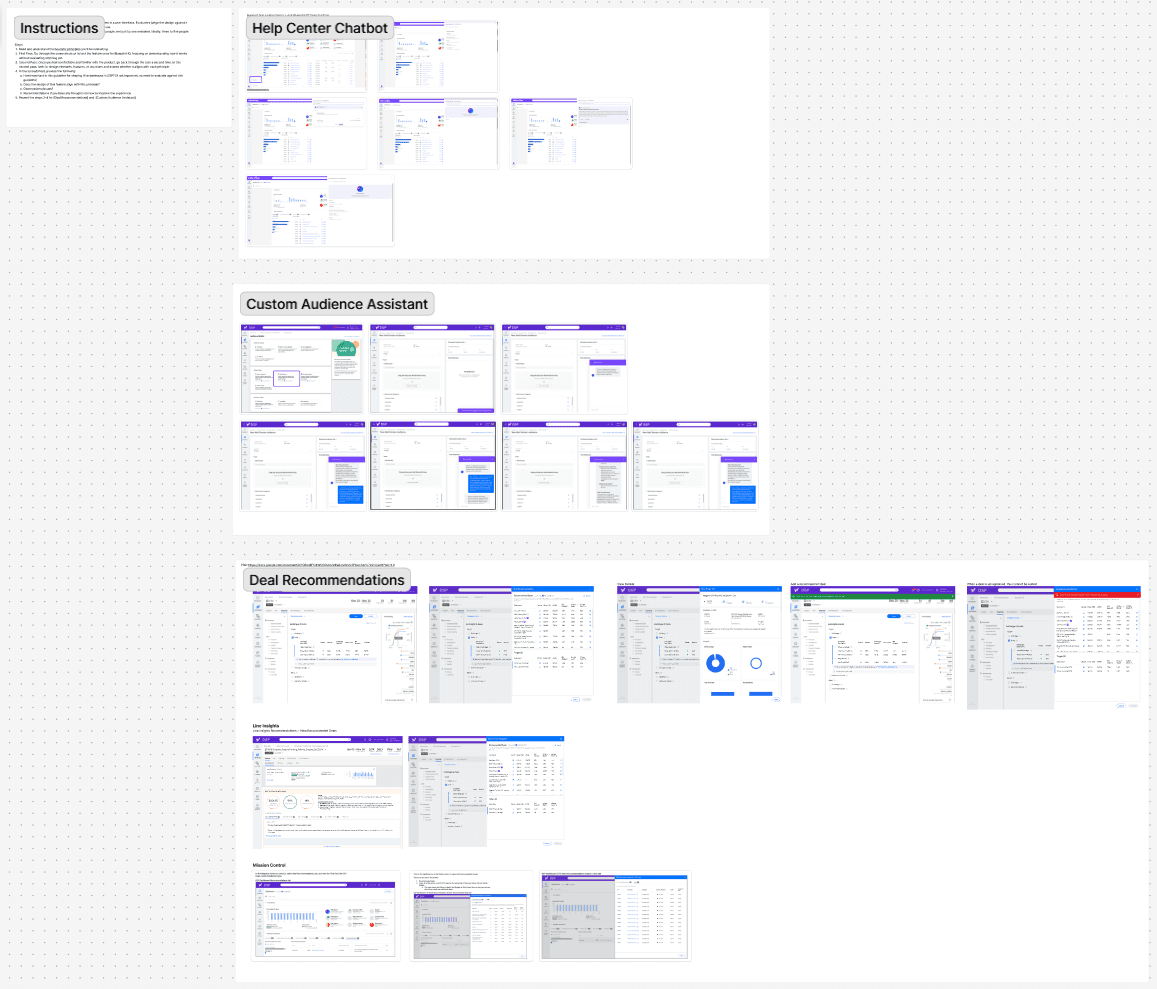
Heuristic Evaluation: Reviewing and Refining Early AI Features

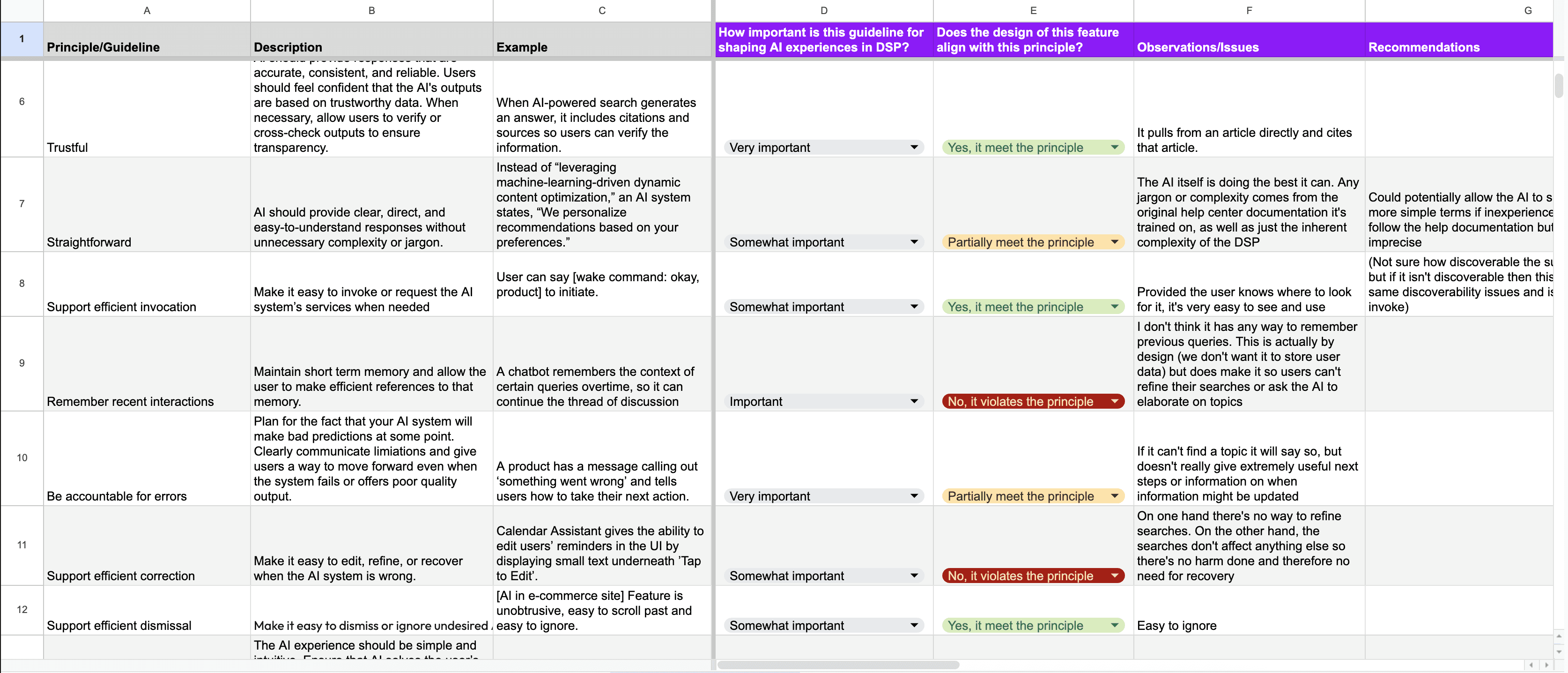
  • Gather and Review — Collected all screens from in-progress alpha features into a single Figma file for easy review and comparison.

  • Assess Against Principles — Rated each feature in a shared Google Sheet to determine how well current designs aligned with established design principles.

  • Iterate and Build Library — Revisited designs that fell short to meet design principles and added components to a living library for consistent reuse in future designs.
Product Vision

AI Opportunity Mapping: Cross-functional workshop to drive strategy alignment

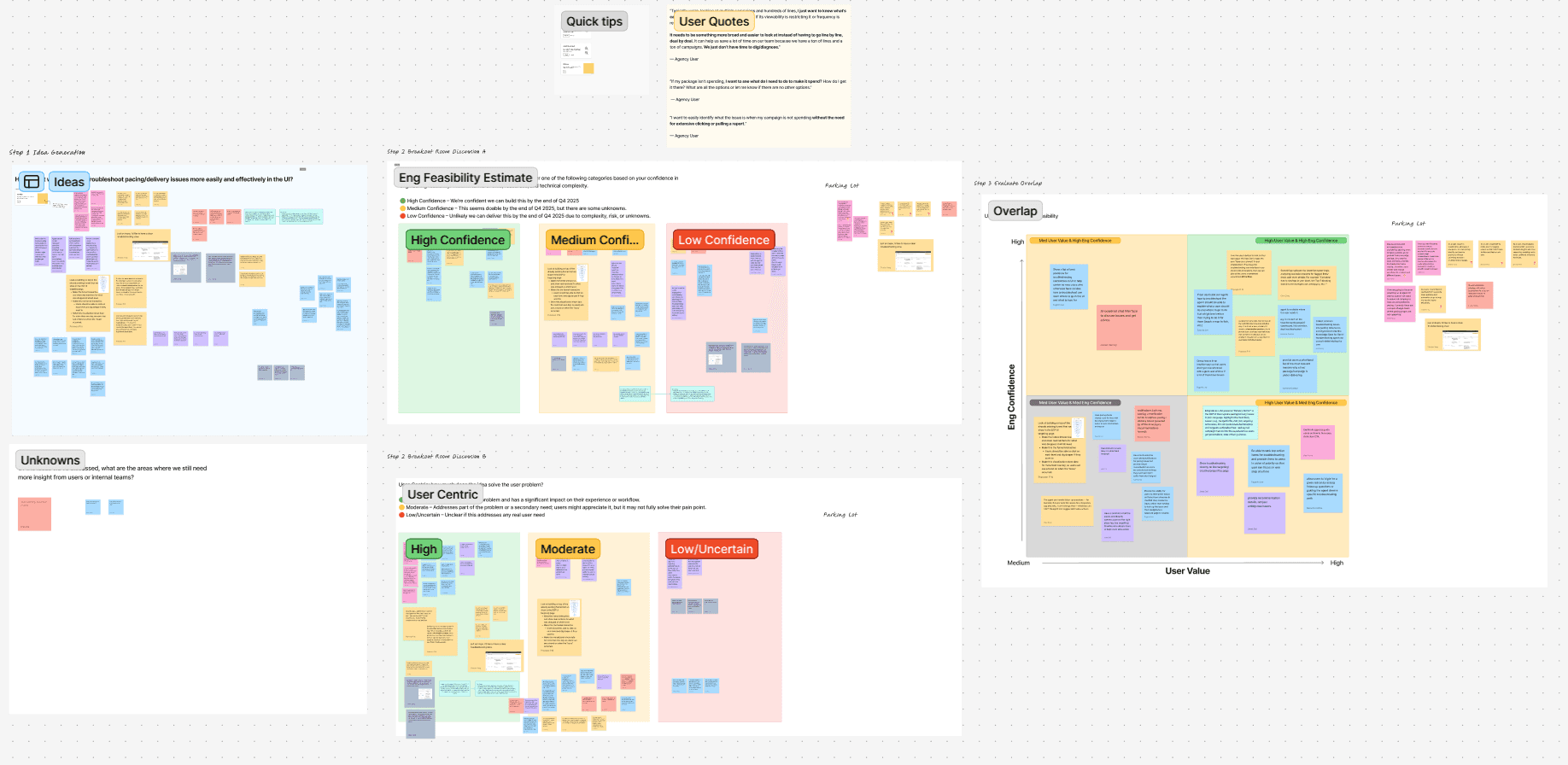
  • Defined Opportunity Space — Leveraged prior design research to identify user touchpoints where AI could add real impact, such as troubleshooting and optimization.

  • Cross-functional workshop — I brought together Product, Engineering, Design and Research to generate ideas, align on goals, and ensure all voices are heard.

  • Impact-Driven Prioritization — Breakout sessions: Engineering assessed feasibility, Design/Product assessed user value. We plotted outcomes on a complexity vs. value matrix.

Outcome: Short-Term Wins, Long-Term Vision

  • Rapid Impact — Selected low-complexity, high-value opportunities to deliver a compelling demo within three months.

  • Shape Strategic Roadmap — Leverage high-value, complex opportunities to position our product ahead of competitors and shape future AI roadmap.
Design System

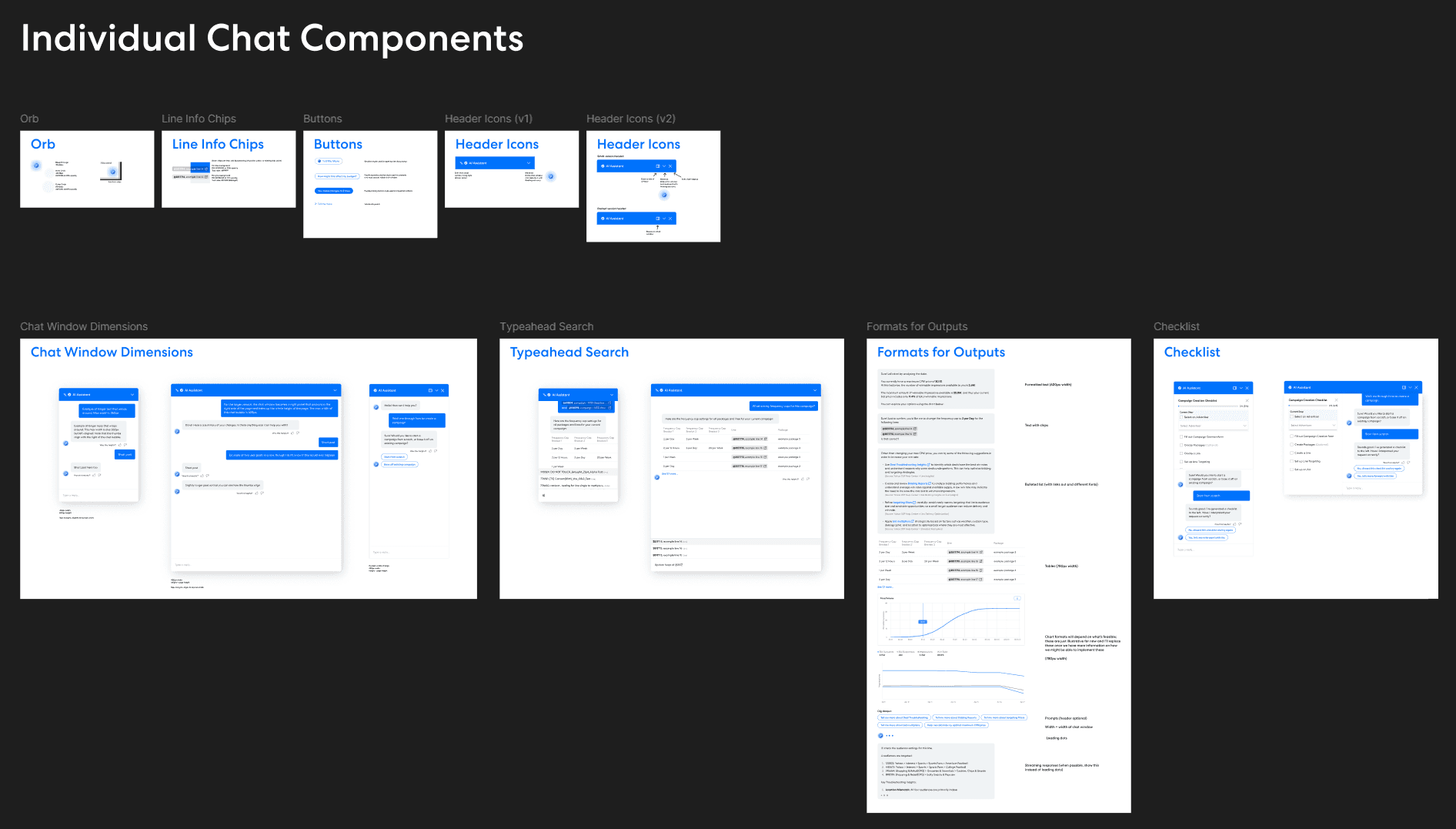
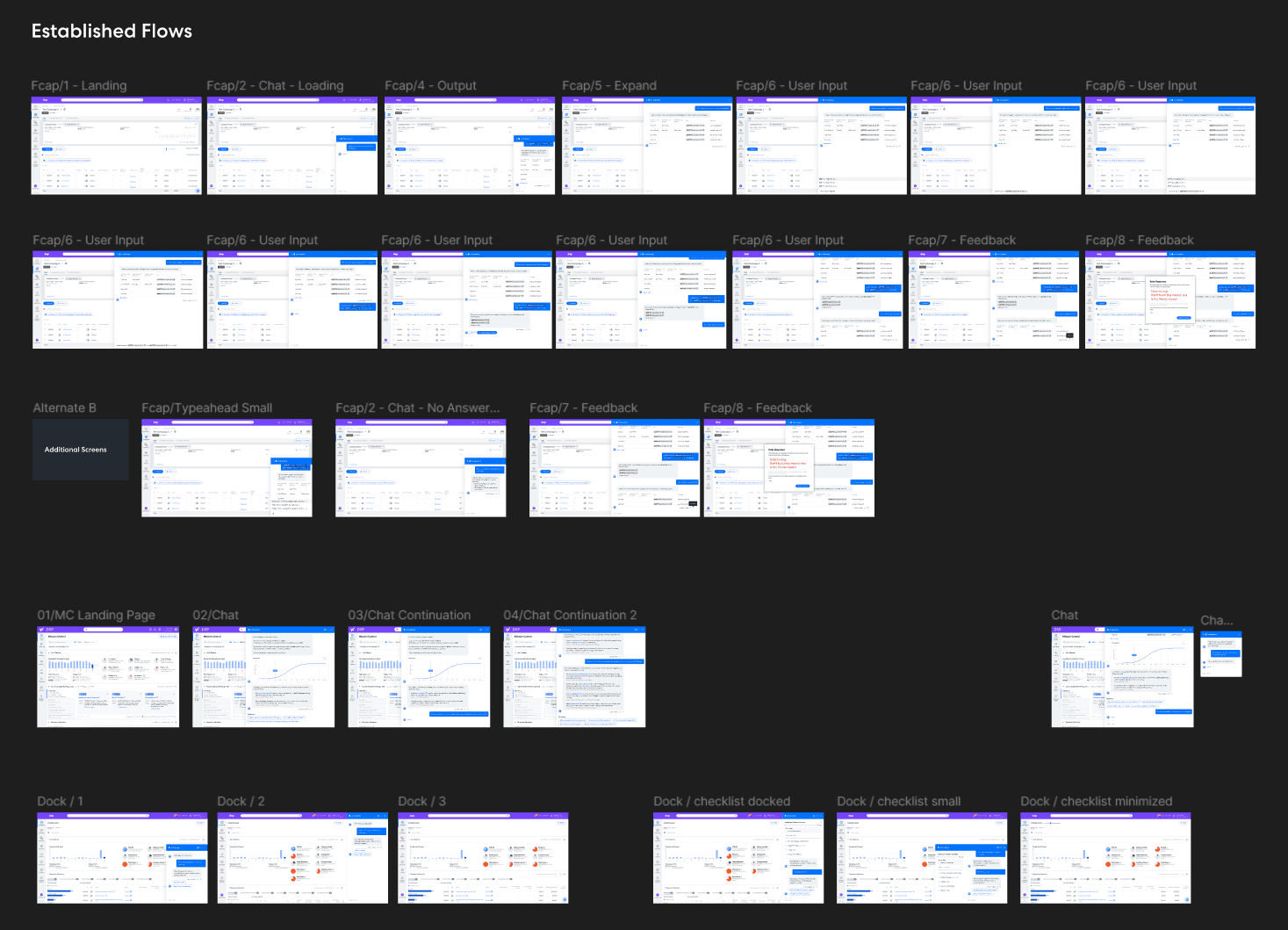
Living Library: Ensuring design consistency during fast-paced iteration

  • Component Library — Designed components just-in-time to maximize speed, keeping the team updated through frequent communication to ensure consistent reuse.

  • Workflow Examples — Documented use of components in context to communicate how they function in practice.
Framework Overview

AI Strategy: Embedding AI into core platform workflows

  • Built a suite of atomic AI tools to power discrete workflows such as generating inputs, automating tasks, and aggregating data.

  • Introduced an orchestration layer that blends AI with deterministic systems and trusted data sources to reduce hallucinations and control token cost.

  • Created a natural language interaction model that clarifies when the system acts autonomously and when humans stay in control, preserving trust and accountability.

Feature Highlights

Generative Input Presets

AI takes over repetitive input tasks, filling in long form fields and providing recommendations based on predicted user behavior.

Primary design considerations

  • Visual transparency: make it clear which fields are AI-filled

  • Data transparency: explain why results were chosen

  • Error recovery: allow manual override

Top 5 Underperforming Lines widget designed by a colleague

Agentic Automation

Specialized tools to intelligently automate specific tasks, e.g. troubleshooting underperforming line items or creating custom audience groups

Primary design considerations

  • Visual transparency: make it clear which workflows are AI-enabled

  • Data transparency: explain what data informs these decisions

  • Confidence calibration: allow users to tune risk

  • Preserving human authorship: all permanent changes must be confirmed by a human before committing to a change, allow mid-task interruption or correction

Chat Interface and Orchestrator

Coordinates tools and works with users to manage their campaigns using a multimedia chat-based interface.

Primary design considerations

  • Data transparency: cite sources for recommendations

  • Scope and context management: prompts to prevent excessive token expenditure due to users asking for things the agent can't do

  • Governance: clear guardrails for multi-user data access

  • Hallucination mitigation: the agent calls on deterministic algorithms to handle calculations and does not invent numbers

  • Preserving human authorship: all permanent changes must be confirmed by a human before committing to a change, allow mid-task interruption or correction

Organizational Impact

Established a Common Language

Developed AI design principles and patterns that became the North Star for design and product teams, enabling rapid alignment on decisions.

Ensured User Trust

Applied a user-centered approach to feature ideation, addressing early concerns about reliability and intrusiveness to create AI tools users actually embrace.

Future-Proofed the Design Process

Built a technology-agnostic design system that supports rapid iteration and accommodates emerging technologies, keeping teams aligned as designs evolve.

Enter password from resume to view project

© 2026 Eugenia Lee